
How to Train a Dog: 9 Proven Tips Every Beginner Needs
How to train a dog is probably the first question that hits you the moment you bring a new pup home — and honestly, it can feel overwhelming fast. Between sit, stay, potty breaks, and a dog that seems to have selective hearing, it’s easy to feel like you’re getting it wrong. You’re not. Dog training just takes the right approach, consistency, and a bit of patience, and almost any dog — puppy or adult — can learn quickly once you get the basics right.
This guide covers everything you need to know about how to train a dog, from the foundation principles to the exact commands worth teaching first, plus the mistakes that quietly slow most beginners down.
Why Dog Training Actually Matters
Training isn’t just about teaching tricks. A well-trained dog is safer, calmer, and easier to live with — for both of you.
-
Improves communication between you and your dog
-
Prevents destructive habits before they start
-
Keeps your dog safe around traffic, other animals, and strangers
-
Builds a stronger, more trusting bond over time
The Foundation of How to Train a Dog: Consistency, Patience, and Positive Reinforcement
Every successful dog training method comes back to three simple principles:
-
Consistency — use the exact same word and tone for each command, every time
-
Patience — dogs learn at different speeds; rushing usually backfires
-
Positive reinforcement — reward the behavior you want instead of punishing what you don’t
Never shout, strike, or physically correct your dog. It doesn’t teach anything useful — it just teaches your dog to be afraid of you, which makes training harder in the long run. The American Kennel Club’s training resources go deeper into force-free methods if you want additional reading.
For a full breakdown of reward-based methods, see our guide on positive reinforcement dog training.
Essential Commands: How to Train a Dog to Sit, Stay, Come, and Down
Before moving to anything advanced, focus on four commands that form the backbone of good behavior:
-
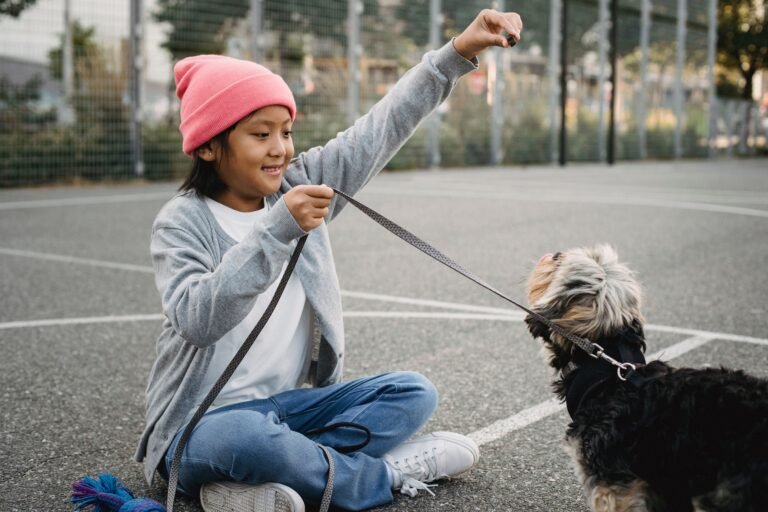
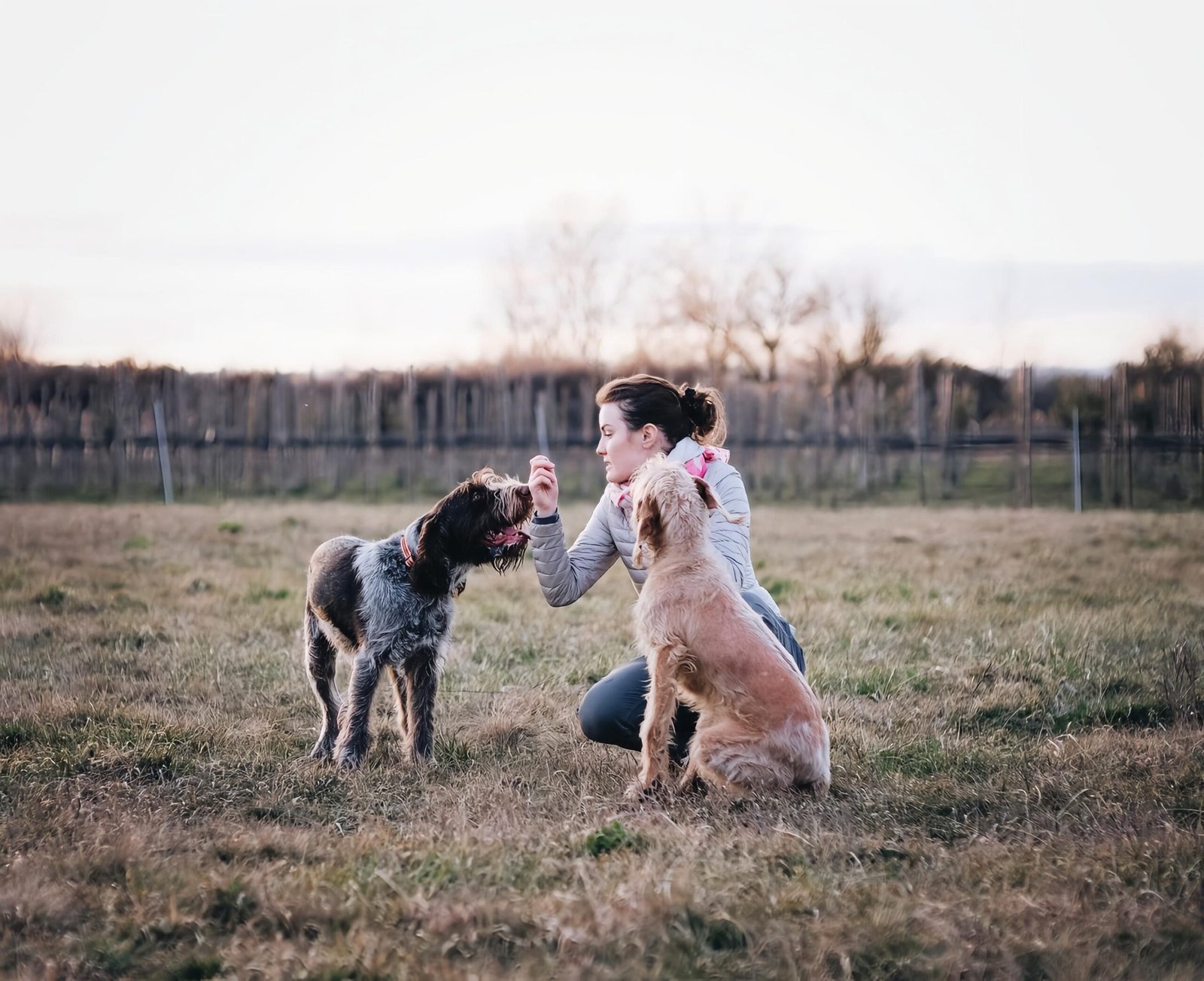
Sit — hold a treat above your dog’s nose and slowly move it back; as their head tilts up, their bottom naturally lowers. Reward the instant they sit.
-
Stay — with your dog sitting, step back while saying “stay” and holding up a hand signal. Reward for even a few seconds of stillness, then gradually increase the distance and duration.
-
Come — on a long leash, let your dog wander a bit, then call them back with excitement in your voice. Reward generously — this command can genuinely save their life someday.
-
Down — from a sit, lower a treat toward the ground; your dog will follow it into a lying position. Reward the moment they’re fully down.
Practice each command for just 5–10 minutes a day. Short, focused sessions beat long, exhausting ones every time.
For more detail, read our full guide on how to teach your dog basic commands.
House Training Basics
House training is usually the very first thing new owners tackle, and a routine makes all the difference:
-
Take your dog outside first thing in the morning, after meals, and before bed
-
Use the same spot outside each time
-
Reward immediately after they go in the right place
-
Never punish accidents — just clean up and reset the routine
If you’re training a puppy, see our step-by-step guide on how to potty train a puppy successfully.
Leash Training Without the Pulling
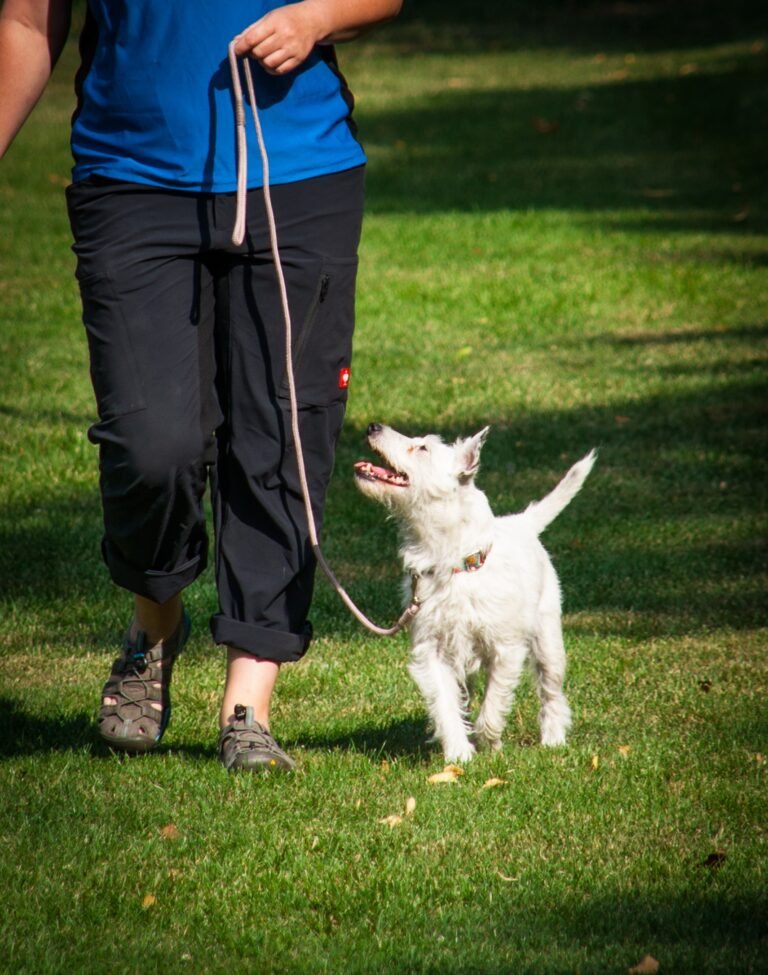
A dog that drags you down the street isn’t being stubborn — they just haven’t learned loose-leash walking yet.
-
Start with short walks in a low-distraction area
-
Stop walking the moment they pull; resume once the leash slackens
-
Reward calm walking at your side consistently
Socialization Matters More Than People Think
A well-socialized dog is a more confident, less reactive dog. Gradually introduce your dog to new people, other animals, and different environments — parks, sidewalks, car rides — so nothing feels overwhelming later. The ASPCA’s socialization guide is a solid, vet-reviewed resource if you want a deeper walkthrough.
Common Mistakes That Slow Down Dog Training Progress
| Mistake | Better Approach |
|---|---|
| Long, tiring sessions | Keep sessions to 5–10 minutes |
| Inconsistent commands | Use the same word and tone every time |
| Punishing mistakes | Redirect and reward instead |
| Training around distractions | Start in a quiet, familiar space |
| Skipping daily practice | Train a little every single day |
When to Get Professional Help
If your dog shows ongoing aggression, extreme anxiety, or simply isn’t progressing despite consistent effort, a certified trainer or behaviorist can make a real difference — there’s no shame in bringing in expert support.
Final Thoughts on How to Train a Dog
Learning how to train a dog isn’t about perfection overnight — it’s about small, consistent wins that build into lasting good behavior. Stick with positive reinforcement, keep sessions short, and stay patient. Before long, you’ll have a dog that listens, trusts you, and genuinely enjoys the process right alongside you.
If you’re just getting started, check out our guide on choosing the right dog breed for your lifestyle and puppy socialization basics — both pair naturally with everything covered here.