

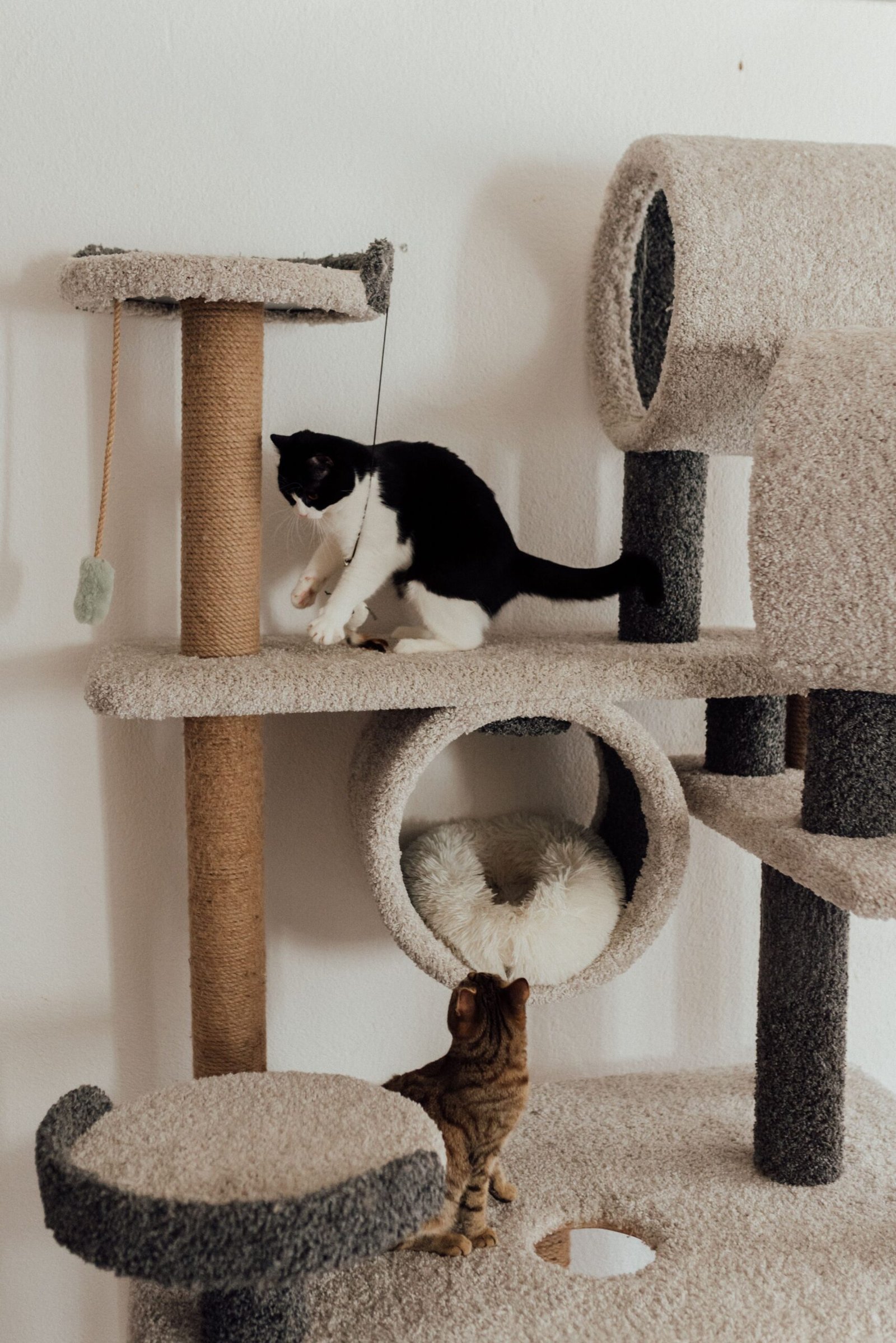
How to Stop a Cat From Scratching Furniture (Without Punishing Them)
If your cat has decided your sofa, your bed frame, or that one armchair you actually liked is now their favorite target, you’re probably searching for how to stop a cat from scratching furniture before it destroys everything you own. I get the frustration — it’s one of the most common complaints cat owners bring up, and honestly, most of the advice out there misses the point entirely.
Here’s the truth: you can’t stop a cat from scratching. It’s a hardwired, natural need — not bad behavior. What you can do is teach your cat to scratch somewhere that isn’t your furniture.
In this guide, I’ll walk through exactly why cats scratch furniture in the first place, how to stop cat scratching without conflict, and how to redirect that instinct onto a scratching post your cat will actually want to use.
Why Cats Scratch Furniture in the First Place
Scratching isn’t random, and it isn’t your cat being difficult. There are real reasons behind it:
-
Nail maintenance — scratching sheds the outer layers of old nail sheaths
-
Territory marking — scratch marks combined with scent from paw glands mark “this is mine”
-
Stretching — it’s a full-body stretch through the back, shoulders, and paws
-
Emotional release — stress, excitement, or pent-up energy often comes out as scratching
-
Boredom or play — sometimes it’s simply something to do
Once you understand this, the whole problem looks different. Your cat isn’t misbehaving. They’re doing something completely normal in the wrong spot — and that’s a fixable mismatch, not a discipline issue.
For more on cat behavior, see our complete guide on how to train a cat.
Choosing a Scratching Post Your Cat Will Actually Use
Not all scratching posts are equal, and a cheap, wobbly one is often the reason redirection fails.
| Feature | What to Look For |
|---|---|
| Height | Taller than your cat’s full stretch — 3 feet minimum |
| Stability | Rock solid; a wobbly post gets abandoned fast |
| Material | Sisal rope, cardboard, or coarse carpet |
| Shape | Ideally both vertical and horizontal options |
| Location | Wherever your cat is already scratching |
Pro tip: don’t stop at one. Two or three scratching posts spread across different rooms dramatically increases the odds your cat picks the post over the couch.
Placement Matters More Than People Think
Here’s where a lot of well-intentioned owners go wrong — they tuck the new scratching post into a spare room nobody uses. Your cat won’t seek it out. Instead, put it exactly where they’re already scratching.
Good spots:
-
Right next to the sofa
-
In the bedroom, near where they sleep
-
A living room corner they already hang around in
Spots to avoid:
-
A closed-off room
-
Anywhere your cat rarely goes
-
A dark, out-of-the-way corner
Using Positive Reinforcement to Redirect the Habit
This is the part that actually makes redirection stick. When your cat uses the scratching post:
-
Give a treat right away
-
Praise them warmly (“Good girl!”)
-
Pet them, if they’re the type that enjoys it
When they scratch the furniture instead, skip the yelling entirely — it doesn’t work and only damages trust. Gently pick them up, place them at the scratching post, encourage a scratch there, and reward it the moment they comply.
For a deeper dive, read our guide on how to teach your cat good behavior at home.
Extra Ways to Protect Your Furniture in the Meantime
While the habit is still forming, a few backup tactics help protect what’s left of your couch:
-
Double-sided tape — most cats hate the sticky texture
-
Washable furniture covers — simple, reversible protection
-
Aluminum foil — some cats are genuinely spooked by it
-
Citrus spray — cats tend to avoid citrus scents
-
Nail caps — soft plastic covers that blunt the damage
-
Regular nail trims — shorter nails simply do less harm
The ASPCA’s guide on cat behavior has more detail on scratching and other common issues.
Common Mistakes That Slow Down Progress
| Mistake | Better Approach |
|---|---|
| Punishing the cat | Redirect instead — punishment breeds fear, not learning |
| Only one scratching post | Add 2–3 in different rooms |
| Unstable, wobbly post | Invest in a sturdy one |
| Post in the wrong spot | Place it where they already scratch |
| Declawing | Avoid entirely — it’s painful and widely considered cruel |
The Humane Society’s stance on declawing explains why this procedure is widely opposed by veterinarians and animal welfare organizations.
When to Talk to a Vet or Behaviorist
Most scratching issues are completely normal and solvable at home. But reach out to a professional if:
-
The scratching starts suddenly and seems pain-related
-
Your cat is scratching themselves, not just objects
-
Scratching is paired with aggression
-
They flatly refuse every scratching post you try
-
You notice any skin irritation or wounds
If you’re also dealing with litter box issues, our guide on how to litter train a cat may help.
Final Thoughts
Furniture scratching feels permanent when you’re in the middle of it, but if you’re serious about how to stop a cat from scratching furniture for good, it’s genuinely one of the most solvable behavior issues in cats. You’re not fighting your cat — you’re redirecting an instinct. Get the post, get the placement right, and reward the behavior you want. Most cats come around faster than their owners expect.
For related reading, check our guide on how to keep an indoor cat healthy and happy.